
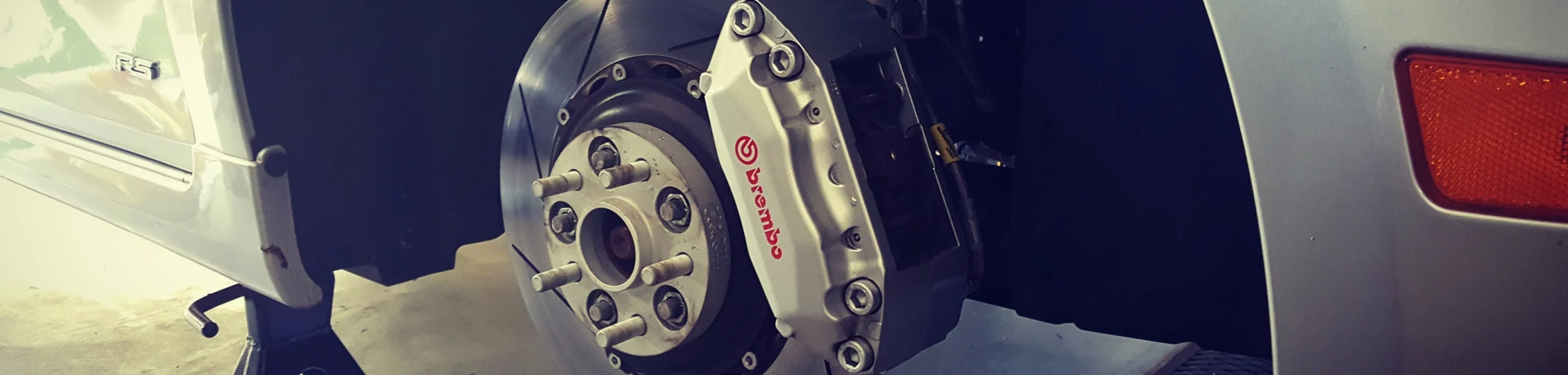
Upgrading a vehicle’s braking system can yield substantial benefits when executed correctly. Thorough research is essential to ensure that the chosen system is appropriately engineered for the specific car model. This ensures that all components within the system operate safely and effectively. In this piece, I will outline my experience upgrading my Chevy Cruze with Brembo brakes, covering the rationale behind my choice, the installation process, and the enhancements I observed.
Let’s first explore the advantages of “big brakes”, particularly for track use. A common misconception about brake upgrades is that they improve stopping power and reduce stopping distances. However, if that is your primary goal, the better investment would be upgrading the tires, as they are the four contact points with the road.
The primary rationale for a big brake upgrade lies in heat dissipation and braking consistency. A larger rotor with increased material and surface area can dissipate heat more efficiently than a smaller rotor. More pistons lead to more uniform pad wear, and when combined with improved heat dissipation, this results in less brake fade, enhanced pedal feel, and consistent braking performance each time the brake pedal is engaged.
However, the upgraded brake kit must be engineered specifically for the vehicle. Without delving too deeply into technical details, the kit must match or closely align with the OEM pressure-torque relationship. For a detailed explanation, reference articles by automotive mechanical engineer James Walker, Jr., such as ABS and Brake Kit Fundamentals and Rear Brake Upgrades: Is Bigger Really Better?
I opted for Brembo due to its longstanding reputation for engineering some of the finest braking systems utilized by automotive manufacturers and racing teams internationally. Their commitment to quality and performance made them a reliable choice for my needs. Although Brembo does not list a specific kit for the Chevy Cruze, I discovered during my research that they have one for the Chevy Sonic. Given that manufacturers often share components, I compared the GM part numbers for both models’ front brake calipers and rotors. To my surprise, the Sonic and Cruze shared the same components, which indicated that the Brembo kit would be compatible with the Cruze. The next step was determining whether these components were engineered correctly for both vehicles.
To assess this, I reached out to James Walker, Jr. He played a significant role in developing our Saturn touring car and possesses a wealth of experience in engineering and racing. I provided him with the OEM specifications for the Cruze’s brake caliper piston and rotor size, along with the specifications for the Brembo setup. After reviewing the data, James concluded that the Brembo kit was within 5% of the OEM pressure-torque relationship. He noted that this 5% variance could be bridged with an appropriate brake pad compound and recommended that I consult with Dave Zeckhausen of Zeckhausen Racing before making a pad selection.
After contacting Dave and sharing James’ insights, he informed me that OEM brakes tend to be heavily front-biased by design, which may not always be optimal. He suggested that the 5% difference could be advantageous and recommended using the same pad compound for both front and rear, which would help balance the braking performance. His recommendation was, “Add bias to the rear until it scares you, then dial it back a bit.”
With this information, I felt confident that the Brembo brakes were engineered correctly for my Cruze, prompting me to order the kit and prepare for installation.
I chose to upgrade the brakes simultaneously with the suspension system, which I discussed in a previous post. The brake kit included calipers (with pads), mounting brackets, rotors, and steel braided lines.
I removed all OEM components and installed the new caliper brackets during the installation. However, I encountered an issue when fitting the rotors, as they came into contact with the OEM dust shield. I considered removing the dust shield entirely but was concerned about maintaining proper spacing.
Since the rotor mounts to the hub and the caliper and bracket are attached to the steering knuckle, removing the dust shield would inadvertently shift the hub closer to the steering knuckle, displacing the rotor out of alignment with the caliper. To avoid potential complications, I decided to trim the dust shield so that it remained in place but would no longer interfere with the rotor.
After clearing the dust shield, I successfully installed the rotors, calipers, and steel braided lines. I torqued all components to the manufacturer’s specifications and bled the system, completing the installation process. Now, I needed to fit the wheels.
The Brembo calipers are significantly wider than the OEM calipers. To accommodate this change while continuing to use the OEM wheels, a 20mm spacer was necessary. This spacer ensured proper clearance between the wheel spokes and the calipers and increased the vehicle’s track width. The wider track enhances handling characteristics and contributes to a more aggressive, “flush” look.
After completing the installation and adjusting the suspension to the initial specifications, I took the car for a drive to ensure everything was functioning as it should and performed a brake bedding procedure. Following any brake pad and rotor replacement, this step is essential, as it helps optimize braking performance.
Upon test-driving the vehicle with the new setup, the most striking improvement was in the brake pedal feel. The pedal exhibited a firmer response, resulting in a more solid overall braking experience. Additionally, the smoothness during braking was markedly improved, enhancing driver confidence and control.
In conclusion, upgrading the braking system on my Chevy Cruze with Brembo brakes has been an amazing journey! The time I spent researching and preparing for this upgrade paid off, as I ensured everything was compatible and performing at its best, which gave me a lot of peace of mind. By weighing the benefits of heat dissipation and consistent braking, I chose an upgrade that perfectly fits my driving style and goals.
Now that I’m hitting the road with my new brakes, I’m excited to feel the improved responsiveness and control. It feels great to know I’ve made a wise investment in my car’s safety and performance to prepare it for the track!


